
Do you ever wish there was an app that could do anything and everything you ever wanted from your mobile device? Sick of searching through multiple screens just to find FaceTime or find a ride home after a long night out? Weixin did just that. Like the United States WhatsApp, Weixin was created for Chinese users in 2011. Within the first three years after the app launched, Weixin already had over 300 million active users in China, Southeast Asia, Europe and America. So, what made is so special that popularity spiked so high?
The ‘HOW’ Behind Weixin
Weixin’s success is the result of the thorough approach that it takes to understand its audience. Created for consumers who are young, urban smartphone owners, the app allows users to:
- Share Photos
- Send Messages
- Find a Cab
- Read and Find the Latest News
- Pay a friend for lunch
- Overall cutting down on Search Costs
Functions are designed to be convenient for users, making the app easy to use. The app decreases the amount of clicks a user makes to search the web, make an online purchase, or check the news. It seems that because Weixin makes everything so easy to do and significantly enhance its users’ self-efficacy, it has gradually become the norm for Chinese people’s media use.
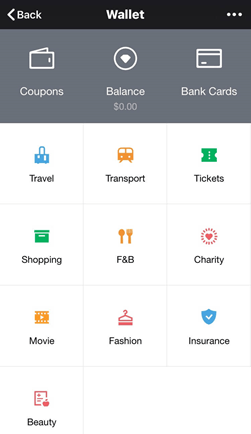
Continuing to introduce new functions and campaigns, Weixin’s goal is to satisfy their audiences needs, and fit moods at certain times. Prior to the Chinese New Year in 2014, the app introdcued their “Qiang Hongbao” campaign; also known as the Red Envelope campaign. In the Chinese culture, Red Envelopes is a tradition when someone gifts you with a monetary value during the holidays. This campaign allowed users to link their bank accounts to the app, and directly send or receive money from another user. With the ease of the transaction, users were inspired to spend more money through the use of the social networking channel.
That same year, a taxi service function was released. Users were able to get in contact with a taxi, book and pay all through the app. Resulting in $20 million virtual cash filled envelopes, and over half a million booking made each day, Weixin satisfies the needs of their users, while also drawing in a profit for themselves.
Should the US go for an all inclusive app?
With the success that China has seen, does it seem right for the US to follow suite? Americans tend to struggle with change. Although from a marketer’s point of view, allowing all social media channel functions; such as Facebook, Twitter, Instagram, and LinkedIn, accessible through one centralized app, sounds a heck of a lot easier than keeping up with several platforms. But,what happens to the personas that are attached to each channel separately? Weixin made their product a part of everyday life for their audience. Build to target mobile users, the app allows users to use it whenever and wherever they are, as long as their phone is available. US users are already comfortable with the separate platforms, that combining them may strike confusion, and lack of new personas for brands. But, only time will tell if the US embarks on this Chinese engagement trend!
“When your social media product becomes a part of people’s daily life, it will be easier for you to make a behavior change, whether this behavior is a purchasing decision or a positive social change, starting with an audience analysis.”
What do you think is next for US social media platforms? Let me know your thoughts!
References:
Mahoney, L. M., & Tang, T. (2017). Strategic social media: from marketing to social change. Chichester: Wiley Blackwell.
 Social Media or Bust!
I agree that the more ingrained in daily life a business can make itself, the more it can dominate the industry. One example I can think of is Amazon. At a base level, I can’t imagine not having Amazon to make quick and easy online orders. In addition to that, I have Amazon Music for playlists, Amazon Kindle for reading, and Amazon Video for buying and renting movies. I use Amazon credit cards and Amazon Pay for making purchases on other platforms. We also have FireTV boxes or sticks on all the TVs in our home and frequently use Alexa to control other electronic devices or find online content. Because of this, Amazon receives a large chunk of my income every year.
One thing I found interesting in doing my Weixin research was that in China, people will often use the app to give money to panhandlers. That demonstrates how ingrained it is in daily life, that people don’t question the fact that a panhandler has a phone to accept donations.
LikeLike